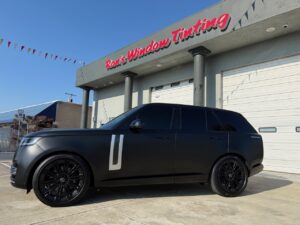
Before choosing window tint for your vehicle, it is important to understand that California does not apply the same rules to every window. Front side windows have strict material and light-transmission requirements, rear windows have different exceptions, and windshield film is limited to specific circumstances.
For Stockton drivers comparing tint options, the most important distinction is compliance: a film’s advertised percentage or product name does not, by itself, establish that the finished installation meets California law.
Here is what to know before your appointment, based on California Vehicle Code Sections 26701, 26708, 26708.2, and 26708.5.
What Does Window Tint Percentage Mean?
Visible light transmission, commonly called VLT, describes how much visible light passes through a material. A lower percentage means less visible light passes through.
California’s front-side-window rules make an important distinction between the film itself and the finished window:
- The applied material must have a minimum VLT of 88%.
- The glass with the material applied must meet the specified federal glazing requirements, including at least 70% light transmission.
- The material must also satisfy additional requirements concerning clarity, color, UVA protection, documentation, and condition.
That is why “70% tint is legal” is an incomplete explanation. The law does not simply authorize any film labeled 70% for the front side windows.
Front Side Windows: More Than a 70% Rule
California Vehicle Code Section 26708(d) addresses the windows immediately to the left and right of the front seat. It allows applied material only when all the listed conditions are met.
The Material Must Be Clear, Colorless, and Transparent
The statute does not provide a general allowance for dark film on these windows. It specifically describes clear, colorless, transparent material with a minimum visible light transmittance of 88%.
A product’s marketing label—such as “ceramic”—does not replace those requirements. The relevant questions concern the material’s actual properties and the finished glazing.
The Finished Window Must Meet Federal Requirements
After the material is applied, the window glazing must satisfy Federal Motor Vehicle Safety Standard No. 205, including the specified minimum light transmittance of 70% and the abrasion-resistance requirement identified in the statute.
Before installation, ask how the proposed material and your vehicle’s existing glass will be evaluated together. Do not assume that the number on a film sample describes the finished window.
The Material Must Enhance UVA Protection
Section 26708(d) also requires the material to be designed and manufactured to enhance the existing glass’s ability to block harmful ultraviolet A rays. Meeting the light-transmission thresholds alone does not satisfy every condition.
You Must Retain the Required Certificate
The driver must possess, or keep within the vehicle, a signed certificate confirming that the windows with the material installed meet the subdivision’s requirements.
For a professional installation, the certificate must identify the installing company and the material’s manufacturer by full name and street address. A separate manufacturer-certificate provision applies when the vehicle owner installs the material.
Deteriorated Material May Need Removal or Replacement
If the material tears, bubbles, or otherwise wears to the point that it prohibits clear vision, the statute requires it to be removed or replaced.
Keep your installation paperwork and contact the installer if the film’s condition begins affecting visibility.
Rear Side Windows: A Different Exception Applies
Section 26708(b)(4) excepts side windows located behind the driver from that section’s general restriction on material applied to vehicle windows. These rear side windows are not subject to the same front-side-window conditions described in Section 26708(d).
However, “different rules” does not mean “no rules.” For example, Section 26701(d) prohibits red, blue, or amber translucent aftermarket material in vehicle windows and other listed glazing locations.
When choosing rear-window film, discuss the intended appearance and visibility with your installer rather than assuming a rear-window exception overrides every other requirement.
Rear Windshield: The Outside Mirrors Matter
For the rear window, Section 26708(b)(8) provides an exception when the vehicle has outside mirrors on both the left and right sides. Each mirror must be positioned to show the driver the highway for at least 200 feet behind the vehicle.
The mirror condition is an essential part of the rule. A summary that says “rear tint is allowed” without mentioning it leaves out a material requirement.
If you are replacing damaged mirrors or modifying the vehicle, keep that requirement in mind when discussing rear-window tint.
Are Colored or Reflective Films Allowed?
California’s requirements depend on the material and where it is installed.
For ordinary front-side installations under Section 26708(d), the material must be clear, colorless, and transparent. Section 26701(d) separately prohibits red, blue, or amber translucent aftermarket material in vehicle windows, windshields, partitions, and wind deflectors.
The topmost-windshield provision also has its own glare-reflection condition. Meanwhile, the 35% reflectivity limit in Section 26708.2 applies to the qualifying removable sun-screening devices addressed by that section—not as a universal reflectivity allowance for every automotive film.
Avoid applying a rule from one window position or special exception to the entire vehicle.
How Do California’s Medical Provisions Work?
California law contains distinct medical provisions. Neither should be summarized as blanket permission to install any darkness of tint.
Clear UV-Protective Material With a Dermatologist’s Certificate
Section 26708(e) allows clear, colorless, transparent material on the windshield, side windows, or rear windows when all its conditions are met.
Those conditions include:
- Material with at least 88% VLT.
- Finished glazing meeting the specified federal requirements, including at least 70% light transmission.
- Material designed to enhance UVA protection.
- A certificate from a licensed dermatologist stating that a medical condition necessitates the clear, colorless, transparent film because the person should not be exposed to ultraviolet rays.
- Removal or replacement if deterioration prohibits clear vision.
The driver must possess the dermatologist’s certificate or keep it within the vehicle. This provision does not authorize dark film simply because a medical condition exists.
Removable Sun-Screening Devices
Section 26708(b)(10) addresses a different situation: qualifying sun-screening devices on the side windows beside the front seat.
The driver or front-seat passenger must possess the specified documentation from a licensed physician and surgeon for a medical condition, or a licensed optometrist for a visual condition. These devices cannot be used during darkness.
Section 26708.2 adds requirements, including ready removability. Transparent devices must be green, gray, or neutral smoke and transmit at least 35% of light. Separate conditions apply to louvered devices, and reflectivity cannot exceed 35% on either surface.
These are specialized device rules—not a general exemption for permanently applied dark front-window tint.
Frequently Asked Questions:
Is 35% Tint Legal on California Front Side Windows?
A film with 35% VLT does not satisfy Section 26708(d)’s ordinary front-side material requirement of at least 88% VLT. The finished glazing must also meet the specified minimum 70% light transmission and the other statutory conditions.
Is 20% Tint Permitted on Rear Windows?
Section 26708 provides exceptions for rear side windows and, with qualifying outside mirrors, the rear windshield. Those exceptions do not impose the front-side 70% finished-glazing requirement, but other applicable restrictions—including prohibited aftermarket colors—remain relevant.
Can I Tint My Entire Windshield?
California does not provide a general allowance for full-windshield aftermarket tint simply because it appears light or clear. Section 26708(c) covers qualifying topmost material; Section 26708(e) separately addresses qualifying clear UV-protective material with the required dermatologist’s certificate and other conditions.
Do I Need to Keep a Tint Certificate in My Vehicle?
For material installed under Section 26708(d), the driver must possess the required certificate or keep it within the vehicle. The medical provision in Section 26708(e) has its own dermatologist-certificate requirement.
Discuss Your Options Before Booking Window Tinting
Understanding California’s tint rules helps you ask better questions before choosing a film. Start with the window position, verify the material and finished-glazing requirements, and confirm what documentation you need to retain.
For your installation consultation with Ron’s Window Tinting, discuss your vehicle, preferred appearance, and proposed film specifications before authorizing the work. Ask the installer to explain how each treatment relates to California’s requirements rather than choosing solely by darkness.
This article provides general information, not legal advice. Requirements can change, and special circumstances may involve additional rules. Review the current California Vehicle Code and applicable official guidance before making installation decisions.